Cover Sets and Weather Contingency (How the AD Builds a Plan B)
A cover set is the difference between a rained-out day that costs nothing and one that costs the whole schedule — here's how ADs actually plan for weather.
Cover Sets and Weather Contingency (How the AD Builds a Plan B)
A cover set is a pre-planned backup scene — usually an interior, usually already dressed and ready to shoot — that the crew moves to when weather kills the day's primary exterior plan. The point isn't just "have something else to shoot." It's having something else to shoot that doesn't require a company move, extra setup time, or cast who aren't already called for the day. A good cover set turns a weather-out into a normal, productive day. A bad or missing one turns it into a lost day that pushes the whole schedule.
Why weather contingency has to be built in advance, not improvised
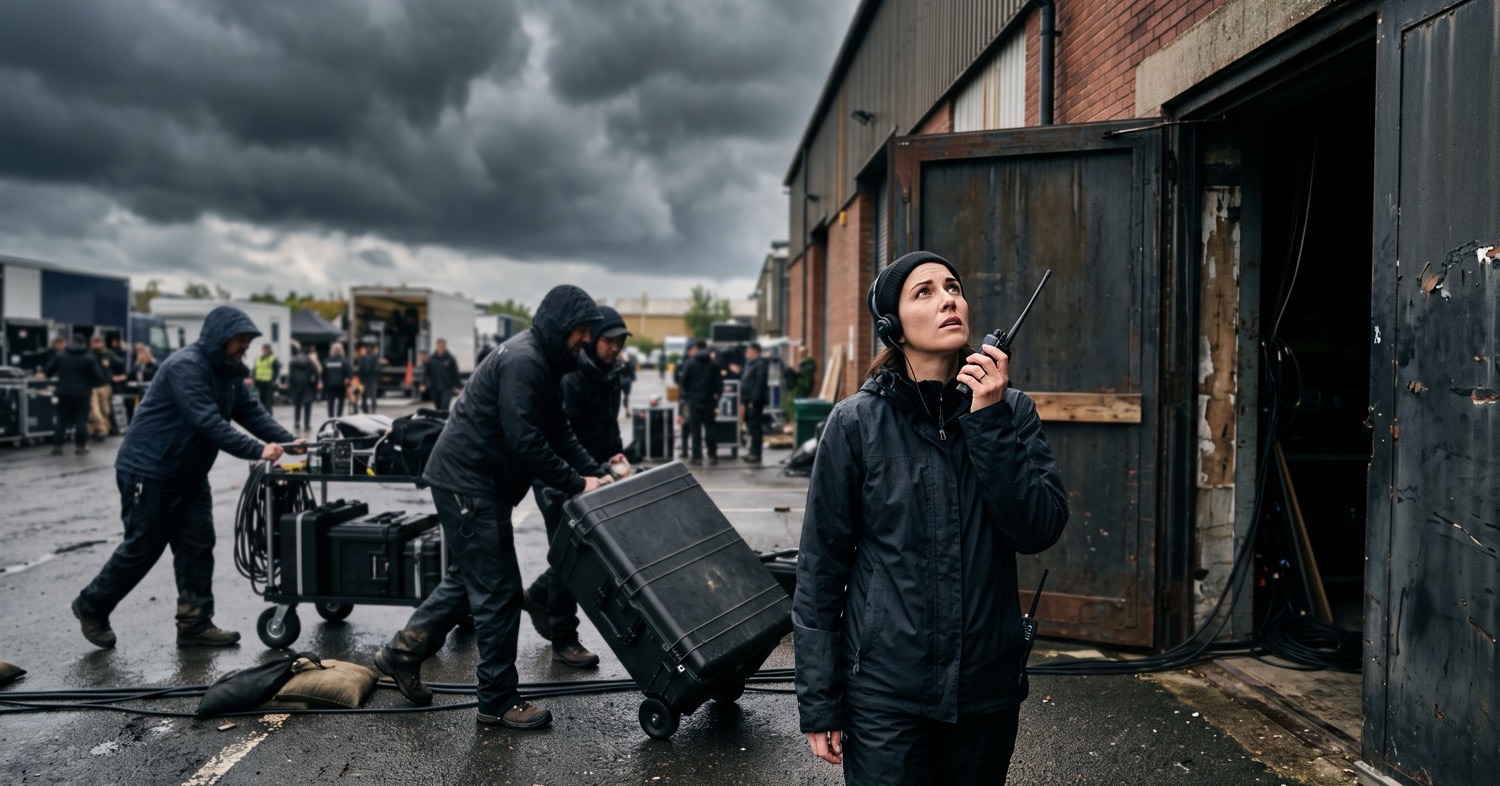
The instinct on a rained-out morning is to scramble — check the call sheet, see who's already on set, and figure out what else could plausibly be shot. That scramble is exactly what a cover set plan exists to prevent. By the time weather forces the decision, you want the answer to already exist: which scene, which set, which cast, already blocked into the schedule as a contingency, not invented at 6 a.m. on a rain call.
This matters more on some productions than others. A production shooting entirely on soundstages doesn't need much of a weather plan. A production with several day-exterior scenes tied to specific locations — especially ones chasing a split day for magic hour, or a scene that can only shoot at one practical location — needs a cover set for every weather-dependent day on the board. This is exactly the kind of risk a tech scout should surface before the schedule locks — walking a location with the full department heads is when you find out whether there's even a viable indoor fallback nearby.
What makes a good cover set
It uses cast and crew who are already called. The whole value of a cover set collapses if switching to it means calling in actors who weren't scheduled for the day. Good cover sets pull from scenes involving the same principal cast already on the call sheet for the primary scene.
It's already dressed, or dressable fast. If the cover set is a location that needs a two-hour art department turnaround before it's shoot-ready, it's not actually a fast fallback — it's a second primary scene with its own setup risk. Interiors that are already dressed, or standing sets, make the best cover sets because the switch costs almost no time.
It doesn't require a company move. Ideally the cover set is at the same location as the primary scene, or close enough that moving to it doesn't eat the hours it was supposed to save. A cover set that requires trucking gear across town isn't a contingency, it's a second shoot day in disguise.
It's genuinely schedulable elsewhere if unused. If the weather holds and the cover set never gets shot, it still needs to happen eventually — so pick a scene from later in the schedule rather than inventing throwaway content. Pulling it forward just means adjusting the one-liner schedule to reflect the swap.
How ADs decide to make the call
Most productions set a decision window — a specific time in the morning by which the weather call has to be made, based on the forecast and the actual conditions at the location. Waiting too long to call it means the crew is already on the road or partially set up when the switch happens, which wastes more time than calling it early and eating a shorter setup on the cover set instead.
A few things that make the call easier:
- Check the forecast the night before and again first thing in the morning — conditions change, and a marginal call the night before might resolve cleanly by call time.
- Have the transportation captain and location manager both looped into the decision, since a switch usually means adjusting call times and parking, not just the shot list.
- Communicate the contingency plan on the call sheet itself, not as a surprise phone call — see how to make a call sheet for where a weather contingency note belongs.
- Don't wait for certainty. A 60% chance of rain on a day with no viable cover set is a day worth planning around regardless of what actually happens.
Where this fits into the bigger schedule
Cover sets are a scheduling decision as much as a location decision — they belong on the stripboard as a tagged alternate for every weather-risk day, not as a separate document nobody checks until it's raining. The scenes chosen as cover sets should also factor into your page-per-day planning, since a weather day that gets a cover set shot instead of the planned scene still needs to hit a realistic page count, just for a different scene.
If a production runs several weather-exposed exterior days in a row without a single viable interior cover set anywhere on the board, that's a sign the schedule was built optimistically rather than realistically — and it's worth revisiting before the first rain call, not during it.
Production Slate lets you tag an alternate scene directly against a shoot day on the schedule, so a weather-call decision updates the call sheet and crew assignments in one place instead of someone manually re-typing a new plan at 6 a.m.
Plan the backup before you need it
The best cover set plans are built into the schedule weeks before a cloud shows up, not improvised on a rain call. Our scheduling tools let you attach a backup scene to any shoot day so the whole crew already knows the plan B the moment weather forces the switch.
Written by Production Slate · Production Slate