Circle Takes Explained (What "Circled" Actually Means)
A circled take is a director or DP's flag for a likely keeper — not a final decision. Here's how the flag works and how selects reach the editor.
Circle Takes Explained (What "Circled" Actually Means)
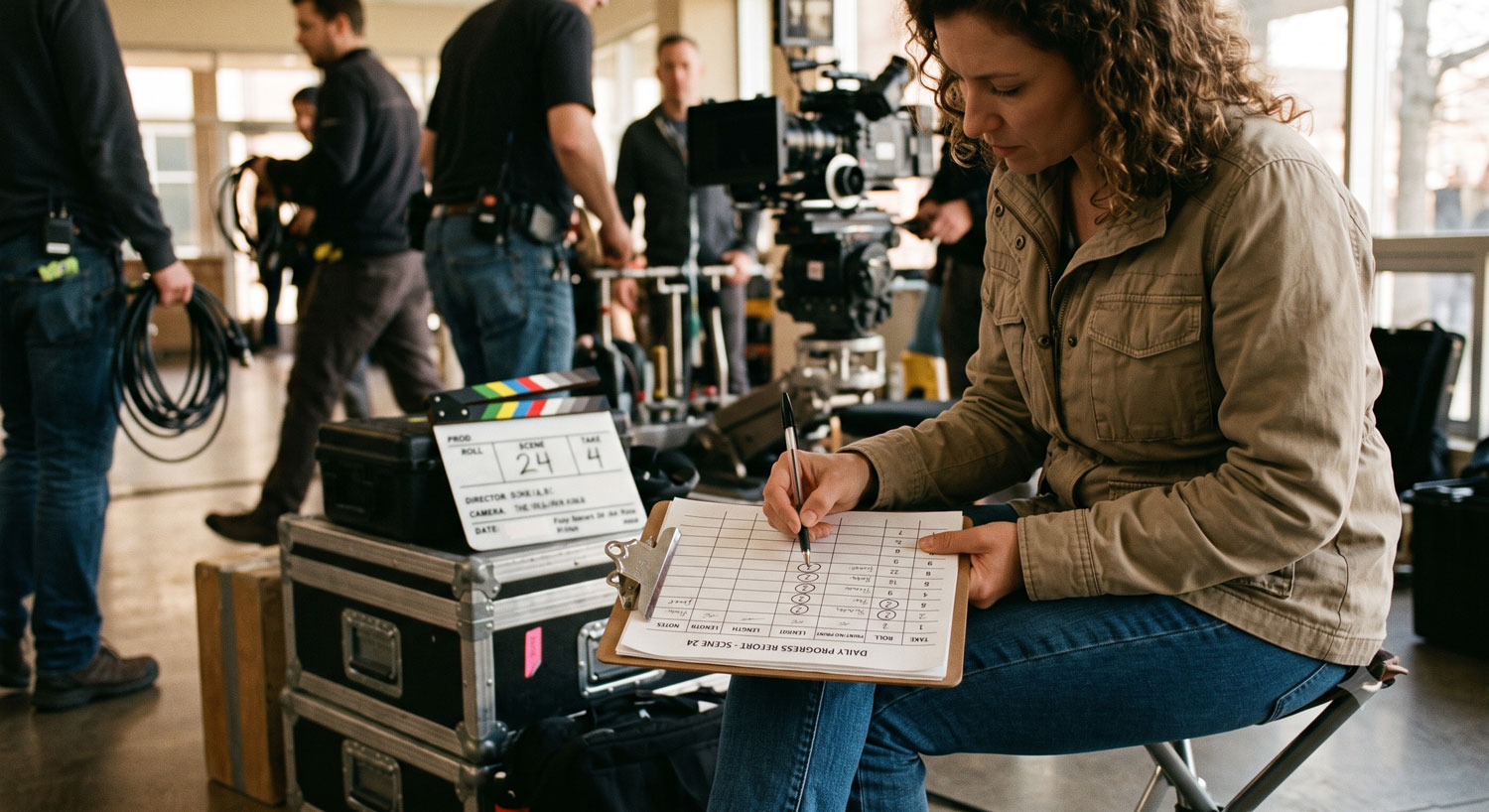
A circled take (sometimes called a "print" take, a holdover term from the film era) is a take the director or DP has flagged during shooting as a likely keeper — the one they'd reach for first when cutting the scene. The name comes from literally circling the take number on the camera or script supervisor's report. It is not a final decision about what makes the cut; it's a filter that tells editorial where to start looking.
Circling exists to solve a real problem: a scene with heavy coverage can produce dozens of takes across multiple setups, and nobody in the editing room was on set to remember which ones actually worked. The circle flag is the on-set record of a creative judgment call, preserved so it survives the trip from set to post.
The 50-word definition
A circled (or "print") take is one flagged by the director or DP during shooting as a strong candidate for the edit, marked on the camera log and/or script supervisor's report. It's a recommendation, not a binding choice — editors regularly build a scene from a mix of circled and uncircled takes based on how the cut actually plays.
Why "print" is the older term
Circling dates back to when film negative was processed and printed to work print for editing — printing every take of every setup was expensive, so the director called out which takes were worth spending film stock and lab time on to actually print. Uncircled takes stayed as unprinted negative, effectively archived unless someone later asked for them. Digital production removed the cost barrier (every take gets recorded regardless), but the workflow habit — flag your best takes as you go, so editorial doesn't have to review everything — stuck around, and both terms are still used interchangeably on set today.
Who calls it and when
Usually the director calls a circled take immediately after it's shot, often right off the monitor, sometimes after checking with the DP or script supervisor about a technical issue that would rule it out. The call gets written down in real time — on the camera log by the camera department, and cross-referenced in the script supervisor's daily report alongside continuity notes for that take.
A single setup can have more than one circled take — a director might circle two takes for different reasons (one for performance, one as a technical safety) and leave the final call to the edit.
How it looks on paper
Scene   Setup   Take   Flag       Reason noted
14      2       1      NG         Focus soft
14      2       2      NG         Boom in frame
14      2       3      HOLD       Camera clean, confirm sound
14      2       4      CIRCLE     Print — strongest performance
22B     1       1      CIRCLE     Print — only full take, matches wardrobe
22B     1       2      CIRCLE     Print — safety, slower pace
Note setup 22B has two circled takes with different reasons attached — that's normal, and it's exactly the kind of detail that gets lost if the notes aren't specific.
How selects actually flow from set to editor
- On set: the director or DP calls the circle during or right after the take; camera and script supervisor log it immediately rather than trying to remember at wrap.
- At wrap: the day's camera log and script supervisor's report are reconciled, and circled takes are confirmed against the lined script to make sure the circled take actually covers the part of the scene it's needed for.
- At ingest: footage moves to editorial (same day or within a few days depending on the production's post workflow, often the same cadence set by the call sheet turnaround for the next shoot day), and the assistant editor tags circled takes in the editing software so they sort to the top of each bin.
- In the edit: the editor's first assembly pulls primarily from circled takes, then reaches into uncircled takes only if the circled options don't serve the scene once it's actually cut against the rest of the film.
That last step is the important nuance: circling narrows the field, it doesn't lock the outcome. Plenty of finished films use a take nobody circled on the day, because context the director didn't have on set (pacing against the surrounding scenes, a performance that reads differently next to another actor's take) changes the calculus in the edit.
Common misconceptions
It's not a guarantee the take is usable. A circled take can still turn out to have an issue (a hair in the gate on film, a boom shadow nobody caught live, a line that reads wrong against a later scene) that only shows up in review.
It's not the same as "print" in a literal digital sense. Nothing is physically printed anymore; every take is already recorded. The flag is purely an on-set recommendation carried forward on paper.
It's not the script supervisor's call. The script supervisor logs and cross-checks circles against continuity and coverage, but the creative call belongs to the director (and sometimes the DP). For the fuller picture of what the script supervisor does and doesn't decide, see what does a script supervisor do.
Keep the flag attached to the footage that earned it
A circle flag written on a paper camera log is only useful if it survives the handoff to editorial without a manual re-transcription step. Production Slate's script supervision log records circled takes alongside continuity notes and lining for each scene, so the flag stays attached to the shot and take it belongs to from set through to the daily report an editor actually reads.
Written by Production Slate · Production Slate